Quick Answer
- Dubai gross rental yields average 6 to 9 percent across mid-market areas.
- JVC leads at 8.5 to 9.5 percent gross with strong tenant demand in 2026.
- Net yields after costs run 1.5 to 2.5 percentage points below gross figures.
- The CRA taxes Dubai rent at your marginal rate with no foreign tax credit.
- AED-USD peg protects rental income from Canadian dollar fluctuations.
Canadian property investors are earning 3.4 to 4.4 percent gross on Toronto condos while paying full marginal tax on every dollar. Dubai rental yields for Canadian investors are running 6 to 9 percent gross, locally tax-free, from a market that recorded Dh252 billion in Q1 2026 transactions alone. The gap between these two outcomes is not marginal. It is structural.
The challenge is knowing which Dubai areas actually deliver, what net returns look like after service charges and vacancy, and exactly what the CRA expects from a Canadian earning rent in the UAE. Most yield guides stop at the gross headline. This one goes further.
This guide covers Dubai rental yields for Canadian investors from the ground up. We break down gross versus net returns, map the top areas by yield tier, cover short-term rental yields as an income strategy, and explain precisely how Canadian tax applies to Dubai rent in 2026.
What Are Dubai Rental Yields?
Dubai’s market-wide average gross rental yield sits between 6 and 8 percent in 2026. That figure covers apartments across all areas and price tiers.
Gross Versus Net
Gross yield is annual rent divided by purchase price. It is the number most marketing materials use. Net yield is what you actually keep after running costs.
- Service charges run AED 10 to 32 per square foot annually for apartments.
- Property management fees absorb 5 to 8 percent of annual rent.
- A realistic vacancy allowance is 5 to 12 percent depending on area.
- Furnishing depreciation and maintenance add AED 8,000 to 15,000 per year.
A 9 percent gross yield in JVC typically nets to 5.5 to 6.5 percent after these deductions. A 6 percent gross in Downtown Dubai typically nets to 4.8 to 5.5 percent. Net is always the number to compare. Dubai rental yields for Canadian investors are still market-leading even on a net basis.
Why Dubai Outperforms Canada
The gap between Dubai and Canadian yields is not cyclical. It is structural, and three forces drive it.
- Dubai charges zero annual property tax on residential units.
- Tenant demand is underpinned by 3.8 million residents and 20-plus million annual visitors.
- Entry prices are low relative to rent levels, especially in mid-market areas like JVC and Business Bay.
Toronto condo yields compress because purchase prices rose far faster than rents over the past decade. Dubai’s price-to-rent ratio has stayed more investor-friendly because new supply keeps attracting fresh rental demand. Explore Dubai investment properties for current listings across yield tiers.
The AED-USD Peg Advantage
One structural benefit most yield guides overlook is currency stability. The AED is pegged to the US dollar at a fixed rate of 3.67 AED per USD.
- CAD has historically depreciated against USD during periods of falling oil prices.
- Holding a UAE rental-yield asset means your income is USD-denominated in effect.
- A weakening Canadian dollar increases the CAD value of your Dubai rent passively.
- FX providers like Wise or OFX can save 1 to 3 percent versus Canadian bank rates on each transfer.
This peg means Dubai rental yields for Canadian investors have a hidden currency upside that purely domestic comparisons miss entirely. That structural advantage compounds over a long holding period.
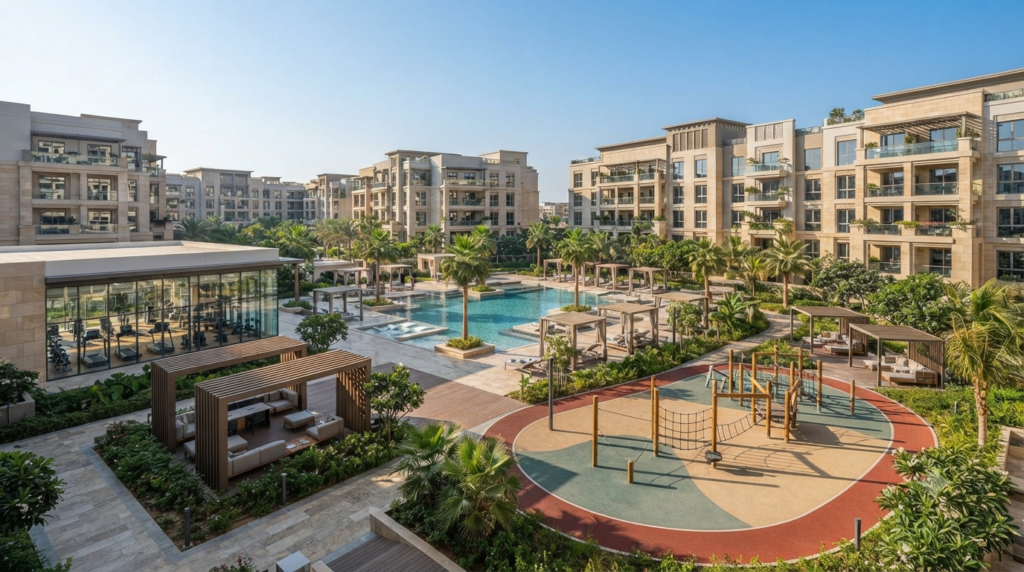
Strong rental yields make Dubai an attractive income market, but returns depend on more than headline percentages. Comparing the highest-performing locations helps you identify where the best balance of income, demand, and long-term growth exists.
Which Areas Yield The Most?
Dubai is not one market. Yields vary by 4 to 5 percentage points across different communities, driven by entry price, tenant profile, and vacancy risk.
The table below shows 2026 gross and net yield bands by the key areas Canadian investors choose, based on current DLD-registered transaction and rental data.
| Area | Gross yield | Net yield | Entry price (AED) | Entry price (CAD) |
| JVC | 8.5 to 9.5% | 5.5 to 6.5% | From 400,000 | From 145,000 |
| Dubai Silicon Oasis | 8 to 9% | 5.5 to 6% | From 380,000 | From 138,000 |
| Business Bay | 6.5 to 7.6% | 5 to 6% | From 700,000 | From 255,000 |
| Dubai Marina | 6 to 7.5% | 4.5 to 6% | From 800,000 | From 290,000 |
| Dubai Hills Estate | 5.5 to 7% | 4.5 to 5.5% | From 1,000,000 | From 365,000 |
| Downtown Dubai | 4.5 to 6% | 3.5 to 5% | From 1,500,000 | From 550,000 |
Net yields in the upper rows still outperform Toronto’s gross yields. The lower rows offer capital appreciation and prestige alongside the income return.
High-Yield Mid-Market
The highest Dubai rental yields for Canadian investors come from mid-market communities where rents are strong, but purchase prices remain affordable.
- JVC delivers 8.5 to 9.5 percent gross, driven by young professional demand and road connectivity.
- Dubai Silicon Oasis attracts tech sector tenants with yields consistently above 8 percent.
- International City and Discovery Gardens push above 9 percent but carry higher vacancy risk.
- Studios and one-bedroom units outperform larger units on yield in every mid-market area.
The trade-off in high-yield communities is lower capital appreciation and slightly higher tenant turnover. Budget a 10 percent vacancy allowance when modelling these areas. Browse off-plan properties in Dubai to access early-stage pricing in growth corridors.
Premium Area Yields
Premium areas trade some income return for stronger capital preservation and lower vacancy risk.
- Dubai Marina delivers 6 to 7.5 percent gross with one of the deepest tenant pools in Dubai.
- Business Bay attracts corporate tenants and delivers 6.5 to 7.6 percent gross with consistent demand.
- Downtown Dubai sits at 4.5 to 6 percent gross but offers the strongest brand recognition for resale.
- Dubai Hills Estate earns 5.5 to 7 percent gross with strong family rental yield demand.
Net yields in premium areas often match mid-market net figures because service charges are higher in luxury buildings. The advantage is liquidity. Premium units rent faster and sell faster, which reduces actual vacancy losses in practice. See properties in Dubai for Canadian investors across both tiers.
Choosing Between Tiers
The right yield tier depends on your investment objective, not just the headline return.
- Income-first investors should weigh JVC, Business Bay, and Dubai Silicon Oasis.
- Balanced investors should consider Dubai Hills and Dubai Marina for the yield-plus-growth combination.
- Capital-first investors should look at Downtown and Palm Jumeirah despite lower yield percentages.
- First-time Dubai buyers benefit from JVC’s low entry price and deep rental yields market.
Neither tier is inherently superior. Dubai pre-construction properties in growth corridors can offer entry pricing that shifts a mid-range area into the high-yield bracket.
Choosing the right location can significantly influence both your rental income and long-term returns. Once you identify the market that fits your goals, the next step is understanding the costs and factors that determine your actual investment performance.
Can Short-Term Rentals Beat Long-Term?
Short-term rentals are a legitimate yield enhancement strategy in the right Dubai areas. It requires active management and a valid permit.
Short-Term Yield Potential
Well-managed short-term rental yields in prime Dubai locations can reach 10 to 14 percent gross yield versus 6 to 7.5 percent on a standard annual lease, based on 2026 Dubai short-term rental data.
- Dubai Marina 1-bedroom apartments can earn AED 140,000 to AED 185,000 per year via short-term rental.
- Prime area properties with iconic views command AED 500 to AED 800 per night in peak season.
- Dubai targets 25 million annual visitors, underpinning short-term rental demand year-round.
- A hybrid strategy running short-term October to April and mid-term May to September maximises annual occupancy.
These returns come with higher operating costs. Management fees run 15 to 25 percent of revenue. Factoring in cleaning, utilities, furnishing depreciation, and DTCM fees, a 12 percent gross can net similarly to a 7 percent long-term lease net figure.
DTCM Permit Requirements
Every short-term rental in Dubai requires a valid holiday home permit from the Department of Tourism and Commerce Marketing. Operating without one carries fines starting at AED 5,000.
- The annual licence fee runs from AED 1,500 to AED 3,000 depending on property classification.
- A Tourism Dirham fee of AED 10 to 15 per room per night is collected from guests.
- A 7 percent municipality fee applies on top of that.
- Airbnb and Booking.com now automatically delist any property without a valid permit number.
Building bylaws in some Dubai towers prohibit short-term rentals entirely. Confirm with the owners association before purchasing any unit specifically for short-term rental use. This one check can save high legal and financial costs.
When Long-Term Wins
Long-term annual leases remain the simpler and lower-risk strategy for most Canadian investors managing from abroad.
- No DTCM permit required, no guest registration, no platform management.
- Annual Ejari-registered contracts provide stable income with predictable occupancy.
- Property management fees run a lower 5 to 8 percent versus 15 to 25 percent for short-term operators.
- Furnishing is optional, removing a high upfront cost and ongoing depreciation.
Most Canadians buying their first Dubai property start with long-term rental and explore short-term after building local knowledge. The income difference rarely justifies the added operational complexity when managing from overseas.
Both rental strategies can produce strong returns when matched with the right property and management approach. Comparing their income potential, costs, and level of involvement will help you choose the strategy that best suits your investment goals.
How Does CRA Tax Your Dubai Rent?
Dubai charges zero tax on rental income. The CRA does not share that view. Canadian residents pay Canadian tax on worldwide income regardless of where it is earned.
The Marginal Rate Reality
Your Dubai rent is taxed at your Canadian marginal rate. There is no foreign tax credit because the UAE charges you nothing to offset.
- A 7 percent gross Dubai yield at a 40 percent Canadian marginal rate nets roughly 4.2 percent after CRA tax.
- A 4 percent Toronto yield at the same rate nets roughly 2.4 percent after municipal property tax and income tax.
- Dubai still outperforms Toronto by nearly 2 full percentage points net of all taxes.
- The gap widens further once Toronto’s 0.6 to 0.7 percent annual municipal property tax is removed from the Toronto net figure.
This is the comparison every Canadian investor should run before concluding that local taxes erase the Dubai advantage. They do not. Our full guide on Dubai property tax for Canadians covers the CRA forms in detail.
Deductions That Reduce Your Tax Bill
Canada allows you to deduct the genuine cost of earning rent before calculating taxable income.
- Mortgage interest on a UAE loan or a Canadian HELOC used to fund the purchase.
- Property management fees paid to your Dubai letting agent.
- Annual service charges and any utilities paid by the owner.
- Routine repairs, maintenance, insurance, advertising, and accounting fees.
- Travel costs for property inspection are deductible but limited and must be documented.
These deductions can materially reduce the net rental income reported on your Form T776. A property earning AED 100,000 in rent with AED 22,000 in deductible costs reports only AED 78,000 in net rental income to the CRA. At a 40 percent marginal rate, that deduction saves roughly CAD 3,000 in annual tax.
T1135 Filing Obligation
Form T1135, the Foreign Income Verification Statement, applies once your Dubai property cost exceeds CAD 100,000. Nearly every Dubai purchase crosses that threshold.
- File T1135 with your annual T1 return by April 30 each year.
- The form is a reporting obligation, not an additional tax.
- Late filing costs CAD 25 per day up to CAD 2,500 per year, plus potential gross negligence penalties.
- Property held mainly for personal use is the only exemption.
The T1135 catches more Canadians off guard than any other Dubai compliance step. Set the habit in year one, and it becomes a 15-minute annual task. Whether Canadians can buy property in Dubai covers the full legal ownership framework.
Understanding how the CRA taxes foreign rental income helps you estimate your true investment return. With the tax rules clear, you can compare Dubai’s overall income potential against other markets and make a more informed investment decision.
What Should You Buy For Yield?
Property type within an area matters almost as much as the area itself. Getting this choice right can shift your yield by 1 to 2 percentage points.
The table below shows how property type affects yield within the same community, using current 2026 data.
| Property type | Gross yield | Net yield | Why |
| Studio apartment | 8 to 10% | 6 to 7.5% | Best rent-to-price ratio, high demand |
| 1-bedroom apartment | 7 to 9% | 5.5 to 7% | Largest tenant pool, lowest vacancy |
| 2-bedroom apartment | 5.5 to 7% | 4.5 to 5.5% | Stronger family demand, higher price |
| 3-bedroom villa | 4.5 to 6% | 3.5 to 4.5% | Capital growth driver, lower income yield |
Studios and one-bedroom apartments consistently deliver the highest Dubai rental yields for Canadian investors because rental demand from single professionals and couples outstrips supply in almost every area.
Studio And One-Bedroom Case
Studios and one-bedrooms dominate the highest-yield bracket for a consistent reason.
- Purchase prices are lower, which mathematically inflates the yield percentage.
- Tenant demand is broadest, reducing vacancy risk and letting speed.
- Furnished studios in JVC can earn AED 38,000 to AED 45,000 per year at prices below AED 500,000.
- That equates to 8 to 9 percent gross with a tenant pool that rarely produces long vacancy gaps.
A furnished one-bedroom in Business Bay priced at AED 800,000 earning AED 56,000 per year delivers 7 percent gross. After service charges, management, and vacancy allowance, the net sits near 5 to 5.5 percent. That still comfortably outperforms any comparable Toronto figure net of all costs.
Villa Strategy
Villas follow a different investment logic.
- Gross yields run 4.5 to 6 percent, lower than apartments in the same community.
- Capital appreciation is stronger. DLD data shows villa prices rose 17.7 percent in 2026 year-on-year.
- Family tenants sign longer leases and cause less turnover, reducing vacancy costs over time.
- Villas qualify for the UAE Golden Visa above AED 2 million just as apartments do.
Villas suit investors prioritising total return over income return. Our guide to the Dubai Golden Visa Canada route explains how villa ownership connects to UAE residency eligibility.
Off-Plan Yield Logic
Off-plan properties require a separate yield analysis because rental income begins only at handover.
- Off-plan payment plans typically require 40 percent during construction and 60 percent at handover.
- Capital gains between purchase and handover often range from 15 to 30 percent in high-demand projects.
- Post-handover rental yields match or exceed secondary market yields in the same community.
- The risk is handover delay. Build a 12 to 18 month buffer into any off-plan income plan.
Off-plan in established developer projects from names like Emaar, Binghatti, and Damac carries significantly lower delay risk than smaller operators. Emaar properties Dubai is a natural starting point for Canadian buyers assessing off-plan yield potential.
Selecting the right property type can have a significant impact on both rental income and long-term returns. Once you match your property choice to your investment objectives, you can build a strategy that balances cash flow, growth, and overall portfolio performance.
Ready To Earn Dubai Yields?
Dubai rental yields for Canadian investors remain among the best income returns available globally in 2026. JVC and Business Bay deliver 6.5 to 9.5 percent gross with net figures that still beat Toronto’s gross yield after all CRA obligations are modelled properly. The AED-USD peg adds passive currency upside for Canadian dollar holders.
The case for acting in 2026 is data-driven. DLD Q1 2026 recorded Dh252 billion in transactions, a 31 percent year-on-year jump in value. ValuStrat forecasts 10 percent citywide capital value growth through the year. Rental income and capital appreciation are both moving in the same direction at the same time, which is the ideal entry condition for any income property.
Register for free with Dubai Property Expo Canada to meet verified developers and model real yields against your budget. Start building income from Dubai rental yields today.
Frequently Asked Questions
What rental yield can Canadian investors expect from Dubai property?
Dubai rental yields for Canadian investors range from 6 to 9.5 percent gross across mid-market areas in 2026. JVC leads at 8.5 to 9.5 percent, while Dubai Marina and Business Bay deliver 6 to 7.5 percent. Net yields after service charges, management fees, and vacancy allowances run 1.5 to 2.5 percentage points below gross. Even on a net basis, Dubai comfortably outperforms Toronto’s gross condo yield of 3.4 to 4.4 percent.
Do Canadian investors pay tax on Dubai rental income?
Yes. Canada taxes residents on worldwide income regardless of where it is earned. Dubai charges zero tax on rental income, so there is no foreign tax credit to offset your Canadian liability. You report net rent on Form T776 at your marginal rate. File Form T1135 if the property cost more than CAD 100,000. Deductible expenses, including management fees, service charges, and mortgage interest, reduce your taxable rental income before the CRA rate applies.
Which Dubai area gives the best rental yield in 2026?
JVC delivers the best overall combination of gross yield and tenant demand, with 8.5 to 9.5 percent gross and a deep pool of young professional tenants. Dubai Silicon Oasis and International City deliver higher gross yields above 9 percent but carry greater vacancy risk. For Canadians who want income combined with liquidity and capital growth, Business Bay and Dubai Hills Estate offer the best balanced return. Studios and one-bedroom apartments outperform larger units on yield in every area.
Is short-term rental worth it for a Canadian investor in Dubai?
Short-term rental can reach 10 to 14 percent gross yield in prime areas like Dubai Marina and Downtown. However, management fees run 15 to 25 percent of revenue, plus DTCM permit costs, Tourism Dirham fees, and furnishing depreciation. Net returns often land similar to a well-managed long-term lease in the same building. Most Canadians managing from abroad start with long-term rental and add short-term as a strategy only after building local market knowledge and trusted operator relationships.
How does the AED-USD peg affect Canadian investors?
The AED is pegged to the US dollar at a fixed rate of 3.67 AED per USD. This means your Dubai rental income is effectively USD-denominated. When the Canadian dollar weakens against the USD, the CAD value of your Dubai rent increases automatically. For Canadian investors with a long holding horizon, this currency structure adds meaningful passive upside that purely domestic investment cannot replicate. Timing large transfers through FX specialists rather than Canadian banks can save an additional 1 to 3 percent on conversions.